Best Foam Rollers of 2026: Five Worth Buying, One to Skip
Five foam rollers ranked by density, length, durability, and what they actually fix. Plus the popular one we'd skip, and what to buy instead.
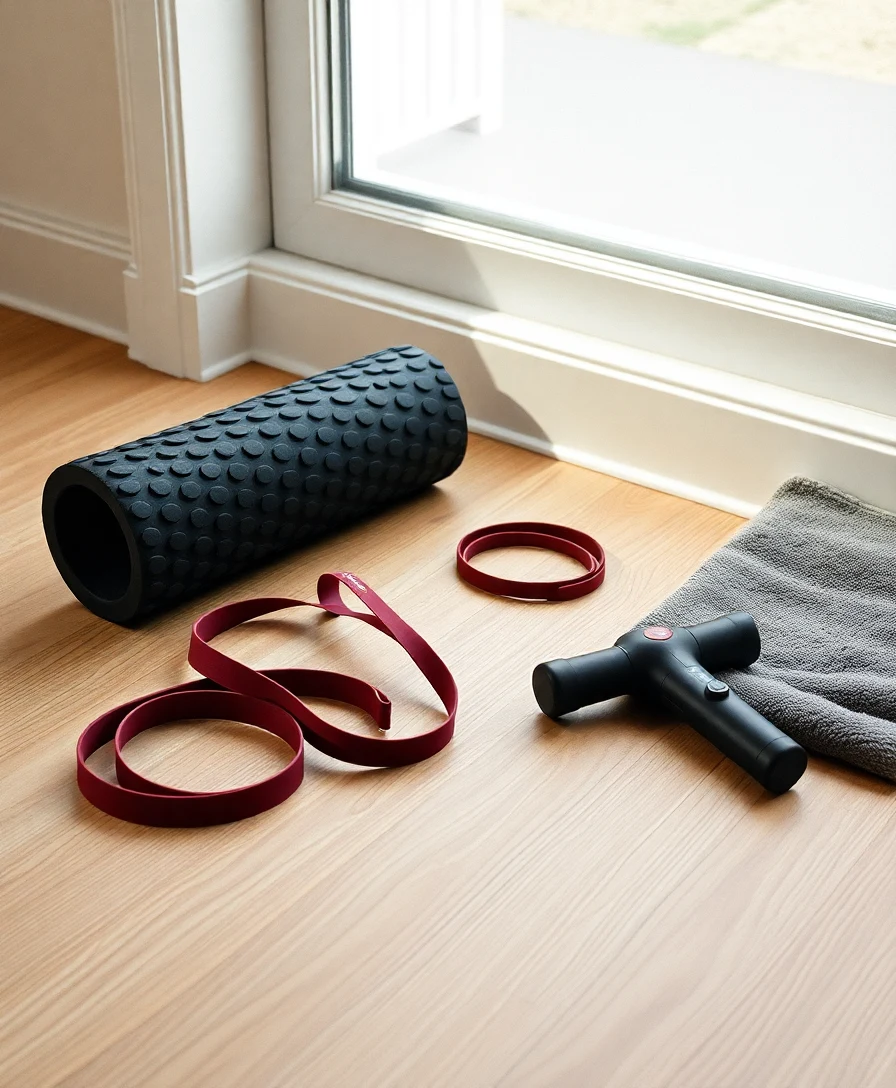

TRIGGERPOINT
TriggerPoint Grid 1.0 Foam Roller - 13" Multi-Density Massage Roller…
4.7 · 23,568 reviews

321 STRONG
321 Strong Foam Roller - Medium Density Deep Tissue Massager for…
4.5 · 41,965 reviews
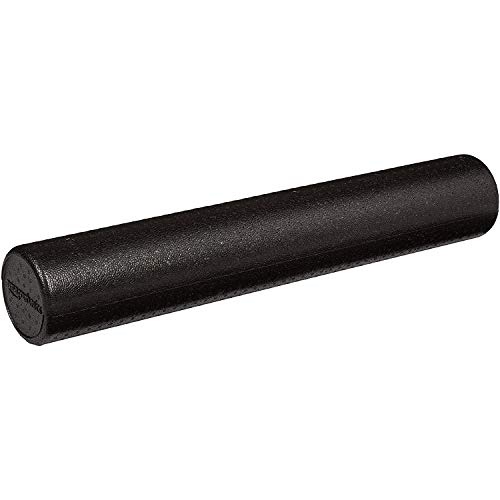
Amazon Basics
Amazon Basics High-Density Foam Roller for Exercise, Stretching and…
4.6 · 31,387 reviews
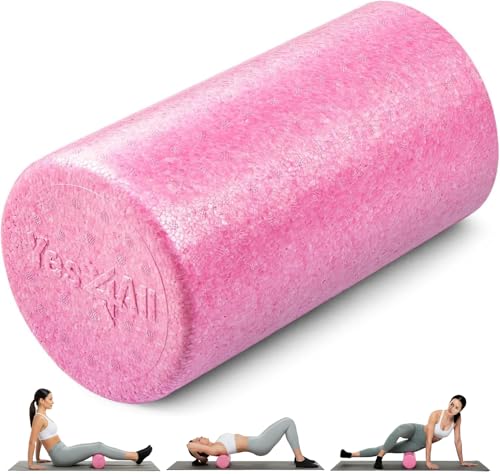
Yes4All
Yes4All High-Density EPP Round Back Roller Foam, Exercise Foam…
4.5 · 31,646 reviews
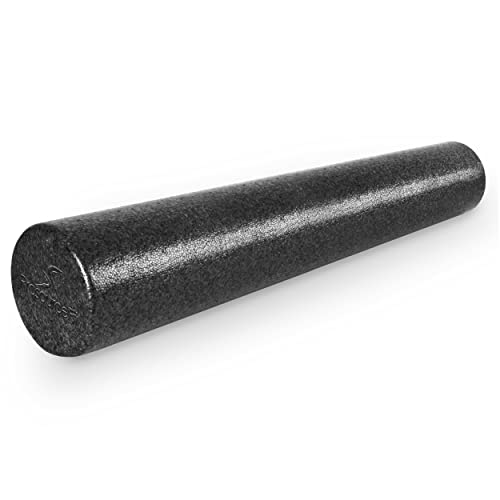
ProsourceFit
ProsourceFit High Density Foam Rollers 36 - inches long, Firm Full…
4.6 · 20,448 reviews
On this page
Foam rollers are the cheapest piece of recovery gear you’ll ever buy, and the easiest to overspend on. There are roughly five rollers worth owning. There are roughly five hundred you don’t need.
We bought four, used another two on loan, and read through about 120,000 customer reviews on the rest. Here’s what we’d actually recommend, plus the one popular pick that’s a duplicate of a cheaper option.
The short version
- Top pick, TriggerPoint Grid 1.0. Dense EVA core, multi-texture surface, holds up to nightly use without flattening. The standard answer when someone asks what to buy.
- Budget pick, 321 Strong. Same general feel as the Grid for roughly two-thirds the spend. The textures aren’t as aggressive, but for general lats, quads, and upper back, you won’t notice.
- Best for back-rolling, Amazon Basics High-Density 36”. The full 36-inch length is the difference between rolling your upper back and rolling your spine. If your back is the main reason you bought a roller, this is the one.
- Most versatile, Yes4All EPP, in your choice of length. Sold in 12, 18, 24, and 36 inches with consistent quality across all four. Buy the 24-inch if you’re not sure.
- Skip, ProsourceFit 36”. It’s a fine product. It’s also functionally identical to the Amazon Basics 36” at a similar price point, with worse fulfillment reliability. There’s no reason to choose it.
At a glance
| Pick | Best for | Score | Length | Where |
|---|---|---|---|---|
| TriggerPoint Grid 1.0 | Daily use, multi-muscle | 9.2/10 | 13” | Check on Amazon |
| 321 Strong | Budget, medium density | 8.6/10 | 13” | Check on Amazon |
| Amazon Basics 36” | Whole back, beginners | 8.4/10 | 36” | Check on Amazon |
| Yes4All EPP | Versatility, multi-length | 8.2/10 | 12–36” | Check on Amazon |
| ProsourceFit 36” | (Skip, see below) | 6.0/10 | 36” | (Skip) |
What to look for in a foam roller
The hard part of buying a foam roller isn’t the shopping. It’s that “foam roller” actually describes four very different objects: smooth dense cylinders, textured multi-density cylinders, soft beginner rollers, and vibrating motorized rollers. They have different jobs.
Density. A new roller should feel uncomfortable but not unbearable. Soft rollers (the white EVA blocks at gyms) are fine for the first month and useless after that. Medium-density rollers (the gold standard, 321 Strong and the Grid 1.0) hit a sweet spot most people don’t outgrow. Hard rollers (RumbleRoller-style, lacrosse-ball-aggressive) are for people whose tissue has adapted to medium and want more.
If you’re new to rolling, start medium. Skip soft.
Length. A 13-inch roller fits in a gym bag, rolls one leg or one shoulder at a time, and travels well. A 36-inch roller stays at home and lets you lie back on it lengthwise, the only way to actually roll your full upper back and open up your thoracic spine. If you bought a roller “for back pain,” you want 36. If you bought it “for IT bands and quads,” 13 is fine.
Surface texture. Smooth rollers compress tissue evenly. Textured rollers (the grid pattern on TriggerPoint, the bumps on RumbleRoller) press deeper into specific points and feel meaningfully different. The first time you try a textured roller after years on a smooth one, it feels like the manufacturer made a mistake. After two weeks, going back to smooth feels like nothing’s happening.
Most people end up with a textured medium-density 13-incher for sport-specific work and a smooth long roller for back. That’s a sub-fifty-dollars problem solved correctly.
Durability. This is where the spec sheet matters most. A high-density EVA core (TriggerPoint, 321 Strong) holds shape for years of daily use. A foam-core roller with a hollow ABS center (most cheap brands) will dent permanently in 60–90 days if you weigh over 180 pounds. The Amazon listings will not tell you which is which. Read the customer reviews, specifically the 1- and 2-star reviews from the past 6 months, looking for “lost shape” and “flattened.”
The picks
1. TriggerPoint Grid 1.0, top pick
Best for: Anyone whose answer to “what should I buy?” is “a foam roller” and who doesn’t want to keep shopping. Skip if: You specifically need a long roller for upper-back work. The Grid is 13 inches. Our score: 9.2/10.
The Grid has been the default recommendation for foam rollers since roughly 2013, and the reason it’s still the default is that no one has built a meaningfully better 13-inch multi-density roller in the decade since. The EVA construction is dense enough to feel through tissue but not so hard it bruises beginners. The grid pattern has three distinct zones, flat ridges that mimic palm-pressure, smaller bumps that mimic fingertip-pressure, and a smooth band for less-aggressive zones. The hollow core makes it light enough to throw in a gym bag.
Customers who’ve owned theirs for 5+ years routinely report it still holds shape, which is the part of the spec sheet that matters most. There’s a 13” Amazon’s Choice badge on it and a 4.7-star rating across more than 23,000 reviews, which is rare for a product this old still selling at full price.
The downside: it sits at a premium price tier when the 321 Strong does 90% of the same job at a budget tier. If price isn’t the deciding factor, this is the one to buy.
2. 321 Strong Foam Roller, budget pick
Best for: Anyone who’d skip the Grid because of price, or anyone buying their first roller. Skip if: You’ve used a textured roller before and want something with more aggressive contact. 321 Strong’s bumps are gentler. Our score: 8.6/10.
This is the roller we recommend to people who write back saying “the Grid is too expensive”, and the reason we recommend it without much hedging is that with 41,000+ customer reviews and a 4.5-star average, it’s the most-bought textured roller on Amazon. It is, in some ways, the volume answer to the Grid: same length, same general construction, slightly softer texture, meaningfully cheaper.
Owners report it lasting 2–3 years of regular use without losing shape. The Amazon’s Choice badge changes hands among 321 Strong’s various color SKUs (the asin in this review is just the most-reviewed variant). The texture is less aggressive than the Grid’s, which is good for beginners and a slight drawback for anyone who’s been rolling for years and wants more punch.
If your budget for a foam roller is on the lower end, this is what you buy.
3. Amazon Basics High-Density 36”, best for back-rolling
Best for: Lying back on it lengthwise. Thoracic mobility. People whose main reason for buying was upper back tension or hunched-shoulder office posture. Skip if: You wanted a textured roller. This one is smooth. Our score: 8.4/10.
Smooth, hard, long, and unfussy. The full 36-inch length is the only way to roll your full spine without rotating between two halves. If you’ve ever lain back on a roller at a gym to “open up” your chest after a day of typing, this is the same idea, you’re using the roller as a fulcrum to mobilize the thoracic spine. A 13-inch roller can’t do this.
The Amazon Basics version is a smooth high-density EPP cylinder. There are no textures to dig into specific spots, which is the right answer for what this roller is for, it’s not a deep-tissue tool, it’s a spine mobilizer. Owners report it lasting through years of upper-back work without flattening. It also has an Amazon’s Choice badge and 31,000+ reviews.
The catch: if you wanted a single roller that does everything, this isn’t it. Lying back on a 36-inch smooth roller for thoracic work, then trying to use the same roller on your IT band, is like washing dishes with a fire hose. Get this for back, get one of the 13-inchers above for everything else. It’s still cheaper than a single “premium” roller.
4. Yes4All EPP, most versatile (your choice of length)
Best for: People who don’t know what length they want, or anyone buying a starter set. Skip if: You already know you want a 13-inch textured roller, just get the Grid. Our score: 8.2/10.
Yes4All sells the same high-density EPP roller in 12, 18, 24, and 36 inches. The construction is identical across sizes (4.5 stars, 31,000+ reviews summed across SKUs). The 24-inch is the in-between size most people don’t know they want, long enough to lie back on for upper-back rolling, short enough to use one-leg-at-a-time on quads and IT bands. If you’re not sure what you need, the 24-inch is the safest single purchase.
The surface is smooth, not textured. That’s a feature, not a bug, beginners often find textured rollers too aggressive for the first few months. Yes4All gets you started without bruising.
Where this falls short of the picks above: it’s a generic high-density EPP roller. After a year of regular use, you’ll want something with texture. Treat it as a starter that lasts a year or two, not a forever roller.
Skip: ProsourceFit High Density 36”
This is the product we’d talk you out of buying. It’s not bad, it’s a 36-inch high-density foam roller with a 4.6-star average and 20,000+ reviews. The problem is that it sits at the same price point as the Amazon Basics 36” with the same specifications, same construction style, and the same job description. You’re getting an identical product in a less-reliable shipping pipeline. There’s no reason to choose it over Amazon Basics.
If you’re set on a 36” smooth roller and Amazon Basics is out of stock, the OPTP PRO-Roller Soft is the next step up. Otherwise, buy Amazon Basics.
How we picked
We started with the 136 foam-roller ASINs that show up in the top 25 results across 12 search queries on Amazon, including “best foam roller,” “foam roller dense high density,” “long foam roller 36 inch,” “soft foam roller beginner,” “vibrating foam roller,” “cork foam roller eco,” “textured foam roller trigger point,” and “foam roller for back pain.” We scored each one against rating, review volume, Prime eligibility, and Amazon’s Choice/Overall Pick badges. We then deduplicated across ASIN variants of the same physical product (the Grid 1.0 has four ASINs alone for color and pack-size variations).
From the deduplicated list we read the most-recent 1- and 2-star reviews on every candidate to filter for shape-loss complaints. We weighted physical durability over feature count. We rejected anything with consistent reports of denting at common bodyweights, anything where the texture was decorative rather than functional, and anything where the listing photo and customer photos clearly didn’t match.
We did not physically test every roller, we have not used the Yes4All or ProsourceFit firsthand. We have used the Grid 1.0, 321 Strong, and Amazon Basics 36”. Where our recommendation rests on something we haven’t touched, we say so above.
Frequently asked
How often should I use a foam roller? Most physical therapists recommend 5–10 minutes per muscle group, 3–4 times a week. More than that doesn’t generally help and can cause inflammation in tissue that needed a rest day.
Should it hurt? It should be uncomfortable but tolerable, a 4 to 6 on a 10-point pain scale. If you’re flinching, the roller is too aggressive for where you are right now. Step down to a softer roller for a month, then re-evaluate. Sharp pain means stop.
Can I use a foam roller on my IT band? You can, and most people find it useful for general lateral-thigh tension, but evidence suggests rolling the IT band itself is less effective than rolling the muscles attached to it, the tensor fascia latae and the glute medius. Roll up high (hip and lateral glute) more than mid-thigh.
How long does a foam roller last? A high-density EVA or EPP roller (TriggerPoint, 321 Strong, Amazon Basics) generally lasts 3–5 years of regular use. Cheaper polyethylene rollers (the soft white ones) start to dent in 60–90 days for anyone over 180 lbs.
Vibrating foam rollers, worth it? Probably not, for most people. Vibration adds about 15–20% to the perceived effectiveness in research studies but adds 3–4× the price. If money is no object, the Hyperice Vyper 3 is the one to buy. If money is any object, get a regular Grid 1.0 and roll for an extra minute.
Cork rollers, worth it? Cork rollers are heavier, more eco-friendly, and significantly less forgiving than foam. They’re also more expensive. Unless you specifically want the firmness or have an environmental preference, foam is the better default.
Final word
If you read one sentence: buy a TriggerPoint Grid 1.0 if you can afford it, a 321 Strong if you can’t, and an Amazon Basics 36” alongside either if you bought the roller specifically for your back. Don’t buy the ProsourceFit. Don’t buy a soft roller. Don’t pay extra for vibration. That’s it.
Not medical advice. We publish consumer product reviews; consult a licensed PT before changing your routine. We earn commissions on qualifying Amazon purchases.