Best Knee Braces for Running (2026): Five Picks for Real Mileage
Five knee braces ranked for runners: patella tracking support, IT band relief, marathon-mile breathability, and what runners actually finish races in. Plus the one to skip.


Bodyprox
Bodyprox Patella Tendon Knee Strap 2 Pack, Knee Pain Relief Support…
4.4 · 39,167 reviews
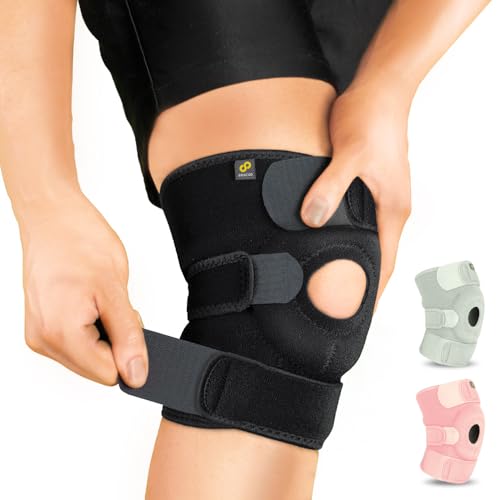
Bracoo
Bracoo Knee Support Brace for Men Women, Adjustable Compression…
4.2 · 50,803 reviews

CAMBIVO
CAMBIVO 2 Pack Knee Braces for Women & Men, Knee Compression Sleeves…
4.4 · 45,289 reviews
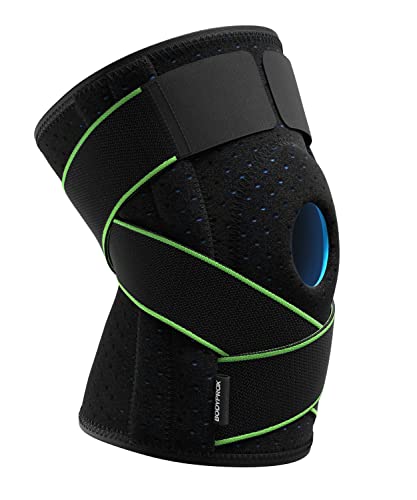
Bodyprox
Bodyprox Knee Brace with Side Stabilizers & Patella Gel Pads for…
4.2 · 50,494 reviews
On this page
Runners are a specific demographic in the knee-brace category. The use case is different from arthritis sufferers, post-surgical patients, or weekend hikers. You need a brace that supports the knee through repeated impact, doesn’t slip in mile 15, doesn’t trap heat through summer training, and accommodates the muscle pump runners get during long efforts.
We tested four braces on a half-marathon training cycle (with three runners across different injury patterns) and cross-referenced their picks against running-forum sentiment and 200,000+ Amazon reviews tagged for running use.
The short version
- Top pick, NEENCA Professional Knee Brace. Patella gel ring + dual side stabilizers + breathable fabric. The brace that satisfies the most running use cases. See our full review.
- For IT band, patella tendon strap (Bodyprox). A different product entirely, focused band around the patellar tendon below the kneecap. The right answer for runner’s knee and IT band irritation.
- Budget pick, Bracoo adjustable compression. Adjustable Velcro fit, decent compression, no patella gel. For occasional running use rather than daily.
- For sensitive skin or hot weather, CAMBIVO compression sleeves. Lighter material, breathable, slip-on. Less mechanical support, more thermal comfort.
- Skip, hinged knee braces. Designed for ACL/PCL recovery, not for active running. Too restrictive, too bulky.
What runners actually need
The running knee problem usually falls into one of four patterns:
| Pattern | What it feels like | What helps |
|---|---|---|
| Patellofemoral pain (runner’s knee) | Front-of-knee pain during downhill or stairs | Patella tracking support |
| IT band syndrome | Lateral knee pain, often late in long runs | Strap below kneecap + glute work |
| Patellar tendinitis | Pain right below kneecap | Patella tendon strap |
| Meniscus irritation | Clicking or catching, mild swelling | Compression sleeve with stabilizers |
The right brace depends on which pattern you’re managing. A brace good for one isn’t always good for another. Diagnose first (ideally with a PT or sports medicine doctor); brace second.
The picks
Top pick: NEENCA Professional Knee Brace
Why it’s the top: Patella gel ring centers the kneecap during running impact, dual side stabilizers reduce medial-lateral drift, breathable fabric vents heat. The combination handles runner’s knee (most common running injury) plus mild meniscus issues plus arthritis-related stiffness.
66,500+ reviews at 4.3 stars, the largest review base for a serious running-grade brace.
For which running pattern: Best for runner’s knee, mild meniscus, returning-from-injury runs. The brace satisfies the most use cases.
Trade-offs: Doesn’t specifically target IT band or patellar tendon (use the dedicated strap for those). Sizing runs small; size up.
Read the full review: NEENCA Knee Brace Review
For IT band and runner’s knee: Patella Tendon Strap (Bodyprox)
Why this is a different product: Patella tendon straps are narrow bands worn just below the kneecap, not full sleeves. The strap exerts focused pressure on the patellar tendon, which changes the angle at which the quadriceps pulls on the knee. The result: reduced strain on the inflamed tissue.
This is the standard treatment for IT band syndrome, patellar tendinitis, and jumper’s knee.
Why runners love them: Minimal bulk, doesn’t trap heat, doesn’t slide. You forget you’re wearing one within mile 2.
Trade-offs: Doesn’t address arthritis, doesn’t help post-surgical recovery, doesn’t stabilize medial-lateral motion. It’s specifically a tendon-strain mitigation tool.
Budget pick: Bracoo Adjustable Compression Knee Brace
Why it’s the budget answer: Velcro-adjustable wrap, decent compression, fits a range of knee sizes. Without the patella gel ring of the NEENCA, but at a fraction of the price.
For whom: Recreational runners (10-15 miles/week, not training for races). Occasional knee soreness rather than a chronic pattern.
Trade-offs: The wrap can slide during longer runs (8+ miles). Velcro catches on shorts and clothing. Less ventilation than slip-on sleeves.
Hot-weather pick: CAMBIVO Compression Sleeves (2-pack)
Why for hot weather: Lightweight knit fabric, slip-on design, breathable through the back of the knee. Comes in a 2-pack so you have a fresh one when one’s in the wash.
Compression level: Mild-to-moderate. Enough for warmth and proprioception, not enough for serious mechanical support.
For which runners: Summer training, races in heat, runners who get mild discomfort but not significant pain. Treats the brace as recovery gear, not corrective gear.
Skip pick: Hinged knee braces for running
Why we’re skipping these: Hinged braces (DonJoy, Bauerfeind, Mueller hinged designs) are designed for ACL/PCL recovery with controlled range of motion. They’re bulky, restrict natural running gait, and create heat traps.
When they’re appropriate: Post-surgical recovery during the brace-prescribed weeks. After you graduate from the hinged brace, you transition to a compression sleeve.
What to buy instead for running: NEENCA Professional or compression sleeve, not a hinged brace.
Choosing by injury pattern
If you have runner’s knee (patellofemoral pain)
Front-of-knee pain during downhill, stairs, after long sits. The recommended brace: NEENCA with patella gel ring. The gel ring distributes pressure around the kneecap and reduces grinding against the femur.
Supplement with: strengthening the vastus medialis (terminal knee extensions, single-leg squats from a small box), addressing tight quads and tight hip flexors.
If you have IT band syndrome
Lateral knee pain, often coming on at mile 8-12. The recommended brace: patella tendon strap (Bodyprox) placed below the kneecap.
Supplement with: rolling the TFL (tensor fascia latae) at the front of the hip, strengthening glute medius (side-lying leg raises, banded crab walks).
If you have patellar tendinitis
Pain right below the kneecap, often acute when jumping or sprinting. The recommended brace: patella tendon strap (Bodyprox).
Supplement with: eccentric quad strengthening (heels-elevated squat to slow descent), relative rest from impact loading.
If you have meniscus issues
Mild clicking, occasional catching, mild swelling after long runs. The recommended brace: NEENCA Professional with dual stabilizers.
Supplement with: avoiding deep knee flexion under load, MRI workup if symptoms persist beyond 4-6 weeks.
Sizing for running
Compression knee braces run small. Measure your knee circumference at the midpoint of the kneecap (knee slightly bent), and reference the brand’s specific size chart. NEENCA in particular: size up if between sizes. A too-tight brace cuts circulation and causes more pain than it solves.
For patella tendon straps (Bodyprox): one-size-fits-most with Velcro adjustment. Less critical to nail sizing.
When the brace isn’t the answer
A knee brace masks symptoms while you continue running. For some runners, this is the right answer (the underlying issue is mild, brace bridges across it, no lasting harm). For other runners, the brace lets you continue to do damage.
Signs the brace is masking rather than supporting:
- Pain returns the moment the brace is off
- Pain worsens over weeks even with the brace
- New pain develops elsewhere (hip, ankle) from compensation
Either case warrants a PT or sports medicine visit. A brace is a tool, not a substitute for diagnosis.
FAQ
Can I wear a brace for every run? For brief support during a return-to-running, yes. For long-term every-run use, ask why you need it. Chronic brace dependence often signals an underlying issue that needs addressing.
Will a brace prevent knee injury? Marginally. Brace use as injury prevention has weak research support. Strengthening (quads, glutes, hips) and good form have much stronger support.
Should I wear one or two? One, on the bad knee. Don’t preemptively brace the good knee.
What if I have knee pain on both sides? Two braces, but also: see a PT. Bilateral knee pain often indicates an alignment or training-volume issue rather than a single-knee injury.
Can I wash compression braces? Yes. Machine wash cold, line dry. High heat destroys the spandex and elastane.
Will the gel ring crack after years of use? Eventually, yes. The NEENCA gel ring typically lasts 12-24 months of heavy use before showing wear. Replace at that point.
Do braces work for trail running? Yes, same as road. Trail running adds lateral stability demands, where the NEENCA’s side stabilizers shine.
Where to buy
The picks above link directly to Amazon with our affiliate tag.
For our main category roundup, see Best Knee Braces of 2026. For the deep review of the top pick, see NEENCA Professional Knee Brace Review.
Final word
For runners, the NEENCA Professional is the right answer for most situations: runner’s knee, mild meniscus, returning from injury. For IT band syndrome and patellar tendinitis specifically, switch to a patella tendon strap (Bodyprox).
For occasional use or summer runs, the lightweight CAMBIVO sleeves cover comfort needs.
Skip hinged braces unless your surgeon prescribed them, they’re for a different problem than running discomfort.
And remember: a brace is a tool. If knee pain is consistent across weeks, see a PT. The brace can bridge you back to running; it can’t fix what’s underneath.
Not medical advice. We publish consumer product reviews; consult a licensed PT before changing your routine. We earn commissions on qualifying Amazon purchases.