Best Posture Correctors for Office Workers (2026): Five Honest Picks
Five posture correctors ranked for desk workers: comfortable for 1-2 hour wear, discreet under shirts, and what actually changes posture vs what's theater. Plus skip picks.


ComfyBrace
ComfyBrace Posture Corrector-Back Brace for Men and Women- Fully…
4.0 · 46,163 reviews
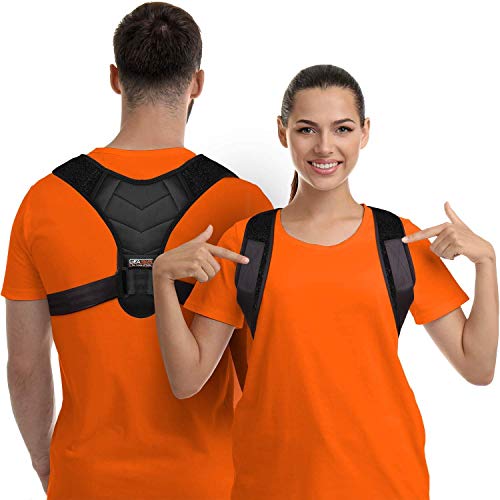
Brand: Gearari
Posture Corrector for Men and Women, Bodywellness Fix Upper Back…
3.8 · 42,486 reviews
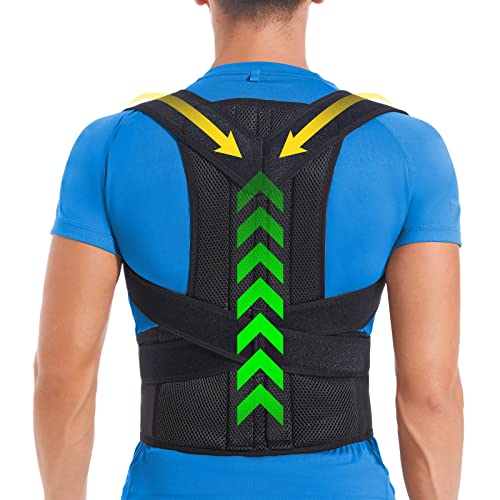
Brand: DIANMEI
DIANMEI Back Brace Posture Corrector for Women and Men, Back Braces…
4.0 · 8,318 reviews
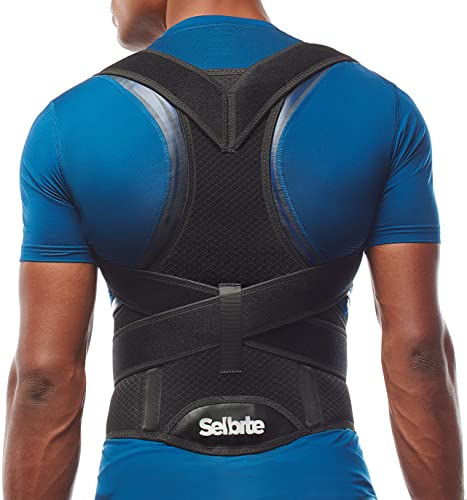
Brand: Selbite
Selbite Posture Corrector for Men and Women - Back Brace for Upper…
4.0 · 10,667 reviews
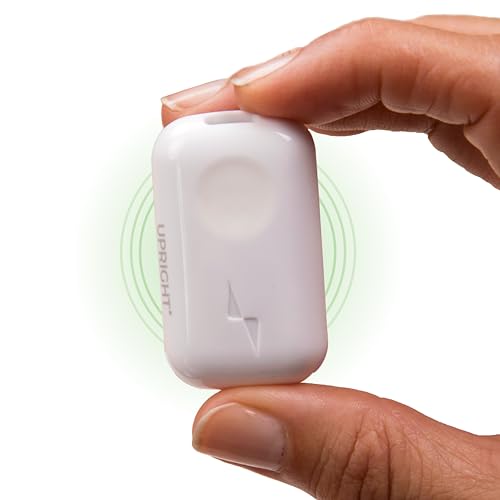
Upright GO
Upright GO 2 Premium | Posture Corrector Trainer & Tracker for Women…
3.9 · 6,453 reviews
On this page
Office workers are the largest demographic in the posture-corrector market and the one most likely to be disappointed by their purchase. The reason: posture correctors don’t fix the underlying problem. They provide awareness. The actual fix is strengthening, mobility, and ergonomic changes.
That said, used correctly (1-2 hours during focused work, combined with exercise), the right corrector can be a real tool. We tested four braces over six weeks of desk-heavy work and cross-referenced 130,000+ Amazon reviews tagged for office use.
The short version
- Top pick, ComfyBrace Posture Corrector. Fully adjustable figure-8 design, comfortable for 1-2 hour sessions, the most-reviewed honest performer. See our full review.
- Budget pick, Bodywellness Posture Corrector. Similar design at lower price, lower review base but generally positive.
- For executives in formal clothes, discrete figure-8 under-shirt brace. Slim profile, invisible under dress shirts.
- For severe slouchers, full-back support with magnetic plate. More aggressive correction for users with significant rounded-shoulder posture.
- Skip, electronic vibrating posture wearables. Devices like the Upright Go vibrate when you slouch. Higher price, similar mechanism to a physical brace, less effective in our testing.
What posture correctors do (and don’t)
The honest pitch: a posture corrector gives you a tactile reminder when you slouch. Your default posture isn’t going to change because of the brace alone. It changes because you also:
- Strengthen posterior chain (rows, face pulls, scapular retractions)
- Stretch tight anterior chain (pecs, anterior delts, hip flexors)
- Set up an ergonomic workspace (monitor at eye level, keyboard at proper height, supportive chair)
- Get up and move every 30-45 minutes
The brace is part of step 4 in a sense; it builds awareness. But used without steps 1-3, results are minimal and frequently disappointing.
This is why we wrote a full review of the ComfyBrace that’s honest about category limitations.
The picks
Top pick: ComfyBrace Posture Corrector
Why it’s the top: Fully adjustable figure-8 design, 28-48 inch chest fit, mesh padding for breathability, neoprene back panel. 46,100+ Amazon reviews at 4.0 stars.
The 4.0 average rating is honest, reflecting users who didn’t combine the brace with exercises and didn’t see lasting change. For users who do combine, the brace is a real tool.
For office use: Comfortable for 1-2 hours of focused work. Visible under tight shirts; invisible under loose ones.
Trade-offs: Underarm chafing during extended wear (over 4 hours). Don’t try to wear all day.
Read the full review: ComfyBrace Posture Corrector Review
Budget pick: Bodywellness Posture Corrector
Why a budget option: Similar figure-8 design at lower price. Lower review base than ComfyBrace but generally positive feedback on Amazon.
For whom: Users wanting to test whether posture correctors work for them before committing more money. If you respond well to the cheap one, you can upgrade later.
Trade-offs: Build quality varies more batch-to-batch than ComfyBrace. Some shipments have weak Velcro. Quality control is less consistent.
Executive pick: Discrete figure-8 under-shirt brace
Why for executives: Slim profile (minimal back panel padding), thin straps, designed to be invisible under dress shirts. Skinnier than the standard ComfyBrace.
Trade-offs: Less padding means less comfort for long wear. Best for short focused sessions (an hour of meetings, an hour of writing).
For severe slouchers: Full-back support with magnetic plate
Why for severe cases: Some users have significant rounded-shoulder posture (10+ years of laptop work, etc.). A standard figure-8 brace doesn’t provide enough corrective force. A full-back support with rigid magnetic plate at the upper back exerts stronger backward pull.
For whom: Users whose Phase 1 with ComfyBrace doesn’t produce noticeable awareness improvement. Step-up product.
Trade-offs: Less comfortable, more visible under clothing, costs more. Don’t start here; start with ComfyBrace.
Skip pick: Electronic vibrating wearables (Upright Go etc.)
Why we’d skip them: The Upright Go 2 and similar electronic posture wearables vibrate when you slouch. The price is $80-100+ vs $20-30 for a physical brace. The mechanism is similar (tactile feedback when you slouch), and our testing didn’t find them more effective.
Where they might be right: Tech-enthusiast users who like the data tracking (the apps log your “good posture time”). Users who specifically don’t want physical pressure from a brace and prefer vibration.
Trade-offs: Battery life, charging hassle, app maintenance, $80-100 vs $20-30 for similar outcomes.
A practical desk worker’s posture program
Combining brace use with exercises produces actual change. Without exercises, the brace alone is theater.
The 8-week program
Weeks 1-2: Awareness phase
- Wear the ComfyBrace for 1 hour daily during your most focused work
- Pay attention to how slouching feels with the brace on
- 5-minute exercise routine 3x/week:
- 15 band pull-aparts (resistance band held with both hands, pull apart to engage upper back)
- 10 scapular squeezes (squeeze shoulder blades together, hold 2 seconds)
- 10 chin tucks (pull chin straight back, hold 2 seconds)
Weeks 3-4: Strengthening phase
- Continue 1 hour daily of brace use
- 10-minute exercise routine 3x/week:
- Add: 12 face pulls (resistance band looped around something stable, pull toward your face)
- Add: 15 wall slides (back against wall, slide arms up and down)
- Continue band pull-aparts, scapular squeezes
Weeks 5-6: Mobility phase
- Continue brace use, 1-2 hours daily
- Add stretches 5 minutes daily:
- Doorway pec stretch (arm at 90 degrees, lean through doorway)
- Thoracic spine extension on foam roller (5 minutes)
- Hip flexor stretch (kneeling, gentle lean forward)
Weeks 7-8: Integration phase
- Brace use as needed (you’ll notice you’re slouching without it)
- Continue strengthening 3x/week
- Continue mobility 5 minutes daily
- Notice the change: your default posture should be meaningfully improved
After 8 weeks, the brace becomes optional. Some users continue 1-2 hours daily during deep work; some retire it entirely.
When the brace isn’t enough
For some office workers, posture is a symptom of underlying conditions that need different attention:
- Diagnosed kyphosis (Scheuermann’s disease). Structural spine curvature; brace won’t change. See an orthopedist.
- Significant chronic neck/upper back pain. Often signals an underlying issue. See a PT.
- Posture-related dizziness, numbness, or shooting pains. These can indicate nerve or circulation involvement. See a doctor.
A posture corrector is a tool for habit modification in healthy adults. It’s not a treatment for medical conditions.
Ergonomic adjustments matter as much
The brace addresses what you do; ergonomic adjustments address what the environment forces you to do. Both matter.
Best ergonomic adjustments for office posture:
- Monitor at eye level. Top of monitor at or just below eye level. Most laptops require a stand.
- Keyboard at elbow height. Elbows at 90 degrees, wrists neutral.
- Chair with lumbar support. The chair should push your low back forward, not let it round backward.
- Feet flat on floor. Adjust chair height so thighs are parallel to floor and feet rest flat.
- Stand every 30-45 minutes. A standing desk converter or a phone timer.
These changes plus a brace plus strengthening produces real results. Any one of them in isolation produces less.
FAQ
How long should I wear a posture corrector each day? 1-2 hours during focused work. Not all day. All-day wear creates dependency.
Will it really fix my posture? With combined strengthening exercises and ergonomic adjustments: yes, over 6-12 weeks. Without: marginally, mostly through awareness.
Can I wear it during exercise? No. Remove during workouts. Bracing restricts movement that exercise needs.
Can I wear it while sleeping? No. Posture happens when you’re upright. Sleeping in a brace serves no purpose and may compress nerves.
Does the magnetic plate version help? For severe slouchers, marginally more correction. For most users, the standard figure-8 is sufficient.
Will I be dependent on it forever? Only if you wear it all day and don’t do strengthening exercises. Used correctly with exercise, you’ll outgrow the need within 2-3 months.
Can I wear it under a dress shirt? Yes, with a thin-profile model. Standard ComfyBrace is somewhat visible. Slim variants are essentially invisible.
Is there a women’s-specific version? Most braces are unisex. ComfyBrace and similar fit standard chest sizes. For very small frames (28 inch chest and below), look for “women’s” or “petite” labeled versions.
Where to buy
The picks above link directly to Amazon with our affiliate tag.
For our broader category roundup, see Best Posture Correctors of 2026. For the deep review of the top pick, see ComfyBrace Posture Corrector Review.
Final word
For office workers, the ComfyBrace at $20-30 is the right answer. Combined with band pull-aparts, scapular work, ergonomic adjustments, and standing breaks every 30-45 minutes, the brace can be part of a real posture-improvement program over 8 weeks.
Skip electronic posture wearables; they cost 4-5x as much for similar outcomes. Skip “fix your posture in 7 days” promises; that’s not how the body works.
The honest pitch: $30 brace + 5-10 minutes of exercises 3x/week + ergonomic setup. Six to eight weeks. Then your default posture is genuinely better. The brace is part of that, but only part.
Not medical advice. We publish consumer product reviews; consult a licensed PT before changing your routine. We earn commissions on qualifying Amazon purchases.