Best Foam Roller for Sciatica: Buyer's Guide (2026)
Sciatica responds to rolling the muscles that compress the nerve, not the nerve itself. Five foam roller picks for the piriformis, glutes, and lumbar paraspinals.
On this page
Sciatica is a symptom, not a diagnosis. The pain along the back of the leg comes from compression or irritation of the sciatic nerve, but the compression can happen at multiple points: the lumbar spine (herniated disc, stenosis), the piriformis muscle in the deep buttock (piriformis syndrome), or referred patterns from the gluteus medius and quadratus lumborum.
Foam rolling addresses the muscular contributors. It doesn’t fix herniated discs. Used in the right context, with the right tool, it can meaningfully reduce sciatic pain. Used wrong, it can worsen the condition.
This guide is for users with diagnosed muscular-origin sciatica (piriformis syndrome, glute medius referral, lumbar paraspinal tightness) or undiagnosed sciatica that you’re managing while waiting for a PT appointment. If you have a confirmed herniated disc, talk to your provider before rolling.
Quick verdict
Top pick: TriggerPoint Grid 1.0. Medium-firm density, multi-density surface, 13-inch length, works well for piriformis and glute work which is where most muscular sciatica originates. See our full review.
Budget pick: 321 STRONG. Same length, slightly milder texture, two-thirds the cost. Good if you’re trying rolling for the first time.
For severe muscular sciatica: a peanut massage ball, not a foam roller. Two tennis balls in a sock, or a commercial peanut ball, give you more focused pressure on the piriformis than any roller. The roller is for the broader muscle work; the peanut for the specific trigger point.
Why rolling helps muscular sciatica
The sciatic nerve runs from the lumbar spine, through the deep buttock (passing either through or under the piriformis depending on anatomy), and down the back of the leg. When the muscles surrounding the nerve get tight, they compress the nerve. When the nerve gets compressed, you feel pain anywhere along the nerve’s path, often in the buttock, the back of the thigh, the calf, or all three.
Foam rolling reduces muscle tension. Reduced tension means reduced compression. Reduced compression means reduced pain. The chain is well-documented for piriformis syndrome specifically.
What rolling doesn’t do:
- Fix a herniated disc (the cause is structural, not muscular)
- Heal a stenosis (the cause is bony, not muscular)
- Cure neuropathic sciatica (diabetic, infection-related, etc.)
For these conditions, rolling is at best neutral, at worst contraindicated. Get a diagnosis before assuming rolling is your answer.
The picks
Best overall: TriggerPoint Grid 1.0
The Grid’s medium-firm density is right for the deep buttock muscles where piriformis-pattern sciatica usually originates. Soft rollers don’t penetrate to the piriformis (it sits under the gluteus maximus); the Grid does.
The textured surface provides additional focal pressure that targets the trigger points common in piriformis syndrome. The hollow ABS core keeps the weight at 1 pound, which makes it travel-friendly for users who need to maintain rolling consistency on the road.
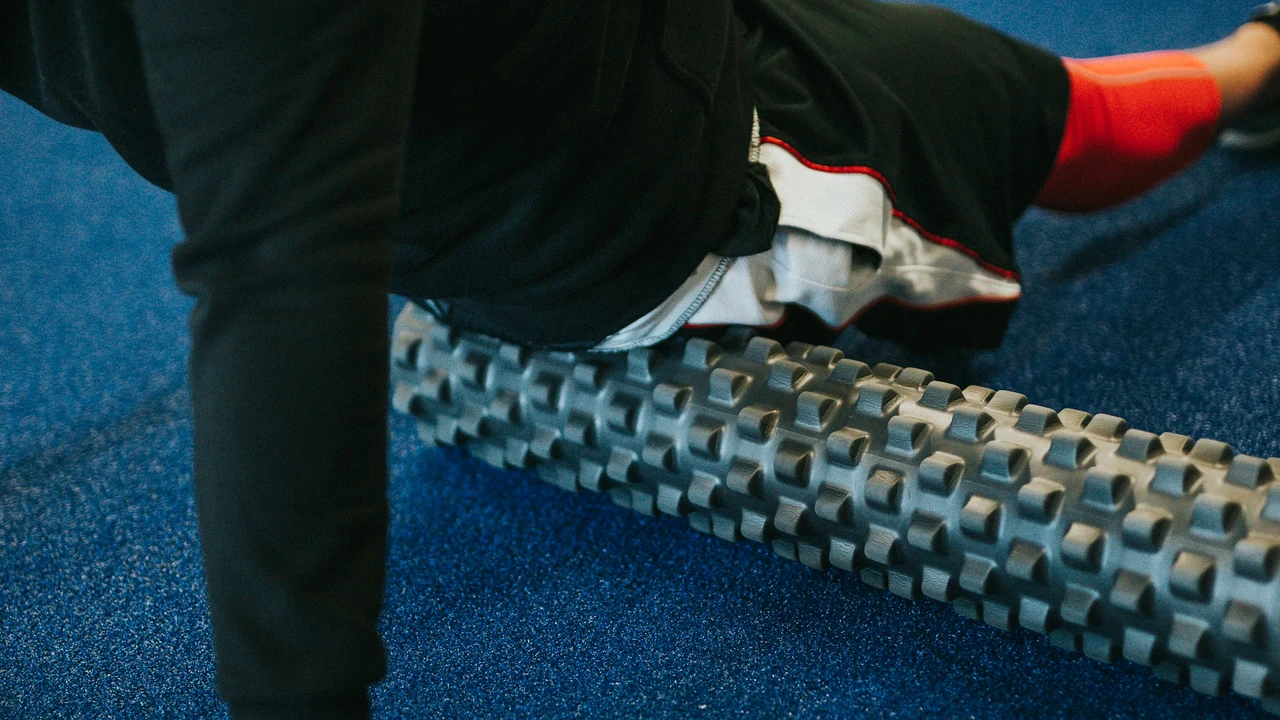
For sciatica specifically: sit on the roller with the painful buttock on top, foot of the painful side crossed over the opposite knee (creates the figure-4 stretch that opens the piriformis). Roll slowly across the buttock, identifying the tender spot. Pause on the trigger point for 30-60 seconds. Roll across the gluteus medius (top of the buttock) as well.
Read our full TriggerPoint Grid 1.0 review.
Budget alternative: 321 STRONG Foam Roller
If the Grid feels too expensive or you’re not sure whether rolling will become a permanent habit, the 321 STRONG is the right entry-level. Same general length and density, milder texture pattern, friendlier price.
The trade-off: less aggressive trigger-point feel. For mild-to-moderate piriformis tightness, the 321 STRONG is plenty. For severe trigger points, the Grid’s texture is meaningfully better.
Long roller for lumbar work: AmazonBasics 36-inch Smooth
If your sciatica originates from lumbar muscle tightness rather than piriformis trigger points, you want a longer smooth roller. Lie on your back with the roller positioned horizontally across the spine, just below the rib cage. Slowly roll up and down the thoracolumbar junction. Avoid rolling directly on the lower back vertebrae.
The 36-inch length covers both sides of the spine simultaneously, which a 13-inch Grid doesn’t.
Peanut-style massage ball: the missing tool
For the specific deep-buttock trigger point that defines piriformis syndrome, neither roller is as effective as a peanut massage ball or two tennis balls in a sock. The peanut shape sits on either side of the spine when used on the lower back, and gives focused pressure on a single trigger point when used on the buttock.
Most users with piriformis-pattern sciatica end up owning both a roller (for general work) and a peanut ball (for the specific trigger point).
How to actually roll for sciatica
The protocol that works for most users with muscular-origin sciatica:
Day 1-7 (assessment phase)
-
Piriformis. Sit on the roller with painful buttock on top, painful-side foot crossed to opposite knee. Find the most-tender spot. Hold there for 60-90 seconds, breathing slowly. Roll over the area gently for another 60 seconds.
-
Gluteus medius. Lying on your side, roller positioned at the upper-outer buttock (above the piriformis, below the iliac crest). Hold on tender spots for 30-60 seconds. Roll gently for another 30 seconds.
-
TFL (tensor fasciae latae). Lying face down, roller at the front of the hip. Hold on tender spots for 30-60 seconds.
Total session: 10-15 minutes, daily for the first week.
Day 8-14 (loading phase)
Same exercises, but add longer holds (90-120 seconds on the most-tender spot) and combine with movement of the painful leg (slow internal/external rotation of the hip while rolling).
Day 15+ (maintenance phase)
Reduce frequency to 3-4 sessions per week. Continue holding on trigger points but with less intensity. Add strengthening exercises (clamshells, side-lying leg raises, banded crab walks) to address the underlying weakness.
What to avoid
Do not roll directly on the spine. The bony spinous processes don’t tolerate compression. Always roll the muscles to either side, not the spine itself.
Do not roll the lower back if pain is sharp and shooting. Sharp shooting pain into the leg can indicate disc involvement. Heat, gentle stretching, and an immediate PT visit are better than rolling.
Do not roll the calf or hamstring if you have numbness in the foot. Numbness signals nerve involvement that needs diagnosis, not rolling.
Do not roll for more than 90 seconds in any one spot. Extended pressure on the nerve itself (rather than the muscle around it) can worsen symptoms.
Do not roll during an acute flare-up. If pain is severe enough that you can’t sit normally, defer rolling until pain reduces to manageable levels. Heat and gentle movement are the right interventions during acute flares.
When rolling isn’t the answer
Sciatica patterns that don’t respond to rolling, or that require professional intervention first:
- Pain that wakes you up at night. Night pain suggests inflammatory or structural cause, not muscular.
- Progressive weakness in the leg. Strength loss is a red flag for significant nerve compression. See a provider immediately.
- Loss of bladder or bowel control. Cauda equina syndrome emergency. Go to the ER.
- Pain that’s been constant for more than 6 weeks despite home care. Time for imaging and a structural workup.
- History of cancer with new-onset sciatica. Rule out spinal involvement.
For these patterns, rolling is not just ineffective, it can delay needed treatment. The cost of “trying foam rolling for a few more weeks” can be significant.
Complementary tools
Foam rolling is one piece. The full muscular-sciatica home program usually includes:
- A peanut massage ball for the specific piriformis trigger point
- Stretching strap for hamstring and piriformis stretches
- Heating pad for pre-rolling warmup (heat makes tissue more pliable)
- Resistance band for strengthening glute medius (the underlying weakness in many piriformis-pattern sciatica cases)
The combination produces better outcomes than rolling alone. Glute medius weakness is one of the most-common underlying causes of recurrent piriformis tightness; if you don’t strengthen it, the rolling provides only short-term relief.
FAQ
How long until rolling helps? Most users with muscular-pattern sciatica see meaningful improvement within 1-2 weeks of daily rolling. If you’ve rolled consistently for 3 weeks without improvement, rolling is probably not the answer for your case.
Should I roll during pregnancy if I have sciatica? Pregnancy-related sciatica is common (the growing uterus shifts pelvic mechanics). Light rolling of the piriformis is generally safe, but consult your OB first. Avoid rolling the abdomen or the lumbar spine directly.
Can rolling cause sciatica? Not directly, but aggressive rolling of the deep buttock can sometimes trigger sciatic pain in users who didn’t have it before. If rolling produces shooting pain down the leg, stop and reassess.
Is foam rolling better than massage for sciatica? Different mechanisms. Professional massage applies pressure with skilled hands that can adapt to your tissue response. Foam rolling is self-administered, less precise, but available daily for free. Best protocol is often: professional massage 1-2 times for assessment and severe trigger points, daily home rolling for maintenance.
Why isn’t the long roller the top pick for sciatica? Most muscular sciatica originates from the deep buttock (piriformis, glute medius) rather than from the lower back muscles. The shorter Grid roller is better for buttock work. If your sciatica is primarily lumbar in origin, the long roller is the right tool.
Can I roll the back of my leg (hamstring) for sciatica? Cautiously. If pain is in the hamstring, gentle rolling can help. If numbness or sharp shooting pain is in the hamstring, defer rolling and see a provider, the nerve itself may be involved.
Where to buy
The picks above link directly to Amazon with our affiliate tag.
For the deep review of the top pick, see TriggerPoint Grid 1.0 Foam Roller Review. For the broader category, see Best Foam Rollers of 2026.
Final word
For muscular-origin sciatica, the TriggerPoint Grid 1.0 is the right tool. Combined with a peanut massage ball for the specific piriformis trigger point and a resistance band for glute medius strengthening, the home protocol can produce meaningful improvement within 2-3 weeks.
For non-muscular sciatica (disc, stenosis, neuropathic), rolling is at best supportive. Get a proper diagnosis. The cost of guessing is delayed treatment of a condition that responds well to early intervention.
Rolling is one tool, not the answer. Use it for what it does, accept its limits, and combine it with strengthening, stretching, and professional care for the best outcomes.
Not medical advice. We publish consumer product reviews; consult a licensed PT before changing your routine. We earn commissions on qualifying Amazon purchases.