How to Foam Roll the IT Band (Without Wasting Your Time)
The IT band itself is dense connective tissue that doesn't respond to rolling. Here's what to roll instead, in what order, and how long to actually fix the pain pattern.
On this page
The IT band is the most-rolled tissue in the world that doesn’t actually benefit from rolling. We see it constantly: runners with lateral knee pain spending 10 minutes a day grinding the outside of their thigh against a foam roller, getting temporary relief, returning to the same pattern the next day.
The reason it doesn’t work: the IT band is dense connective tissue. It connects the TFL muscle at the hip to the lateral tibia just below the knee. The tissue itself doesn’t compress, doesn’t lengthen meaningfully under rolling pressure, and doesn’t have the contractile units that respond to manual therapy. Rolling it produces neural desensitization (the area becomes temporarily less painful) without changing anything structurally.
What does work: rolling the muscles that pull on the IT band. The TFL, the glute max, the vastus lateralis. These are real muscles with real responses to pressure.
Here’s the protocol.
What you need
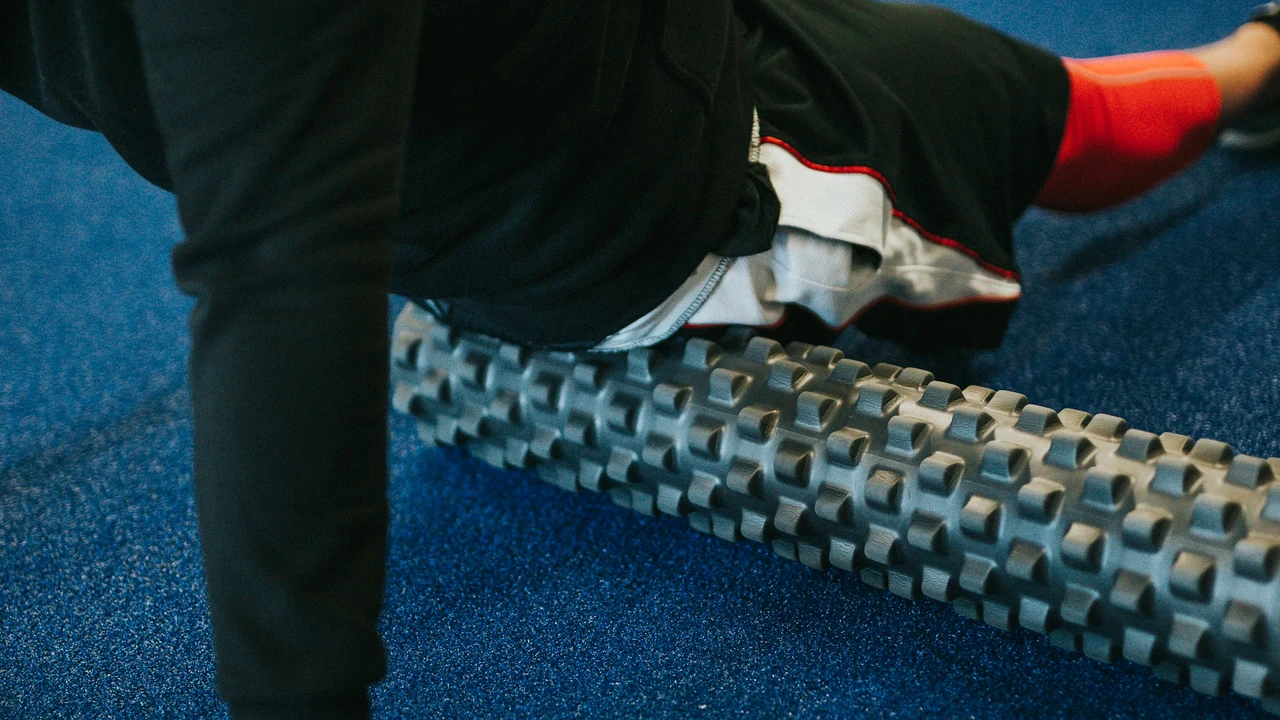
- A medium-density foam roller. The TriggerPoint Grid 1.0 is the standard recommendation. A 321 STRONG or AmazonBasics roller works too.
- 10-15 minutes
- Some floor space
That’s it. No accessories needed for this specific protocol.
The full session
Step 1: Warm up (1-2 minutes)
Light walking or gentle hip circles to warm the tissue before rolling. Cold tissue doesn’t respond as well to pressure work.
Step 2: TFL, 60-90 seconds
The TFL (tensor fasciae latae) is the small muscle at the front of your hip that attaches to the top of the IT band. Tight TFL = excess IT band tension. This is usually the highest-yield rolling target.
Position: lie face down, support yourself on your forearms, place the roller just below your bony hip point (the ASIS) on the painful side. Roll your weight onto the roller. You should feel a tender spot in the muscle just outside that bony point.
Hold on the tender spot for 60-90 seconds. Breathe slowly. The intensity should reduce gradually as you hold.
Step 3: Glute max, 60-90 seconds each side
Sit on the roller. Cross the foot of the side you’re working onto the opposite knee (the “figure 4” stretch position). Lean toward the painful side so most of your weight is on that buttock.
Roll slowly across the buttock, identifying the most tender spot. Hold there for 60-90 seconds. The glute max attaches to the upper IT band; tightness here pulls on the band.
Repeat on the opposite side if you have bilateral issues.
Step 4: Vastus lateralis, 60-90 seconds each side
Lie face down, position the roller along the outer thigh, between hip and knee. The vastus lateralis is the outermost quad muscle. It runs along the IT band’s path and is often tight in IT band sufferers.
Slow passes along the length of the muscle. Don’t roll for more than 90 seconds; this isn’t the primary target.
Step 5: Glute medius, 30-60 seconds each side
Side-lying, roller positioned at the upper-outer buttock above where you worked the glute max. This is the gluteus medius, often weak and tight simultaneously in IT band sufferers.
Brief work here is enough; the bigger leverage is in the strengthening that comes later.
Frequency and timing
For an active IT band flare (pain during runs, pain when walking down stairs):
- Daily, once per day. Same protocol above. 10-15 minute session.
- Continue for 2-3 weeks or until pain meaningfully reduces during normal activity.
For maintenance after the flare resolves:
- 3 times per week. Same protocol.
- Pair with strengthening (clamshells, banded crab walks, single-leg bridges) to address the underlying glute medius weakness.
What to stop doing
Aggressive direct IT band rolling. The “I’m going to roll my IT band until it loosens up” approach. The IT band doesn’t loosen because it isn’t designed to. Stop wasting the time.
Rolling for more than 90 seconds in any single spot. Extended pressure can irritate the underlying tissue. The diminishing returns curve is steep after about 60-90 seconds.
Rolling during acute injury. If you have sharp, sudden pain (not the chronic ache of IT band syndrome), defer rolling and assess what happened.
When to see a PT
If you’ve done this protocol consistently for 4-6 weeks without meaningful improvement, the issue is likely not the muscles I’ve listed above. Common alternative diagnoses:
- Iliotibial band syndrome with biomechanical contribution (hip drop pattern, overpronation, leg length difference)
- Lateral meniscus involvement (the lateral knee pain can come from the meniscus, not the IT band)
- Patellofemoral pain syndrome (front-of-knee pattern that radiates laterally)
- Lateral collateral ligament strain
A PT visit can distinguish these and prescribe specific intervention.
The strengthening piece
Foam rolling alone won’t fix IT band syndrome. The underlying issue is usually weakness in the glute medius. Add these exercises 3 times per week:
- Banded clamshells. Side-lying with a band above the knees, keeping feet together, open the top knee against the band. 2 sets of 15.
- Single-leg glute bridges. Lying on your back, one foot planted, the other extended. Lift hips. 2 sets of 10 each side.
- Banded crab walks. Band above the knees, slight squat position, step sideways maintaining tension. 2 sets of 10 steps each direction.
Six to eight weeks of consistent strengthening produces lasting results. Rolling alone produces only short-term relief.
For our gear recommendations
The right tool matters. See our TriggerPoint Grid 1.0 review for our top foam roller pick, and Best Foam Rollers of 2026 for the broader category.
For IT-band-related muscle work with a massage gun (an alternative to foam rolling), see Best Massage Gun for IT Band.
Final word
The TFL, the glute max, the vastus lateralis. These are the muscles that need attention for IT band syndrome. Skip the band itself. Combine the rolling with glute medius strengthening for the lasting fix.
If symptoms persist after 4-6 weeks of consistent work, see a PT. Self-care has limits; chronic IT band issues often need biomechanical assessment to identify the underlying cause.
Not medical advice. We publish consumer product reviews; consult a licensed PT before changing your routine. We earn commissions on qualifying Amazon purchases.